This is the book that taught modern occultism how to think in columns. Behind the gilt "777" stamped on its scarlet cover lies the single most influential reference work of twentieth-century Western magic: a great folding set of tables that lines up, side by side, the gods, colors, plants, perfumes, jewels, Tarot cards, Hebrew letters, angels, demons, drugs, and Chinese hexagrams of a dozen traditions, all hung on the framework of the Qabalistic Tree of Life. Want to know which Egyptian deity, which scent, which precious stone, which Tarot trump and which note of the scale all answer to the planet Venus? You turn to the row and read across. Crowley's own introduction states the ambition plainly: this is "an attempt to systematize alike the data of mysticism and the results of comparative religion," and to "concentrate the substance of twenty thousand pages in two score."
The story of its making is part of its appeal. Crowley wrote the bulk of it from memory, ill and without a single book of reference, during a stay at Bournemouth, simply because he wished he owned a compact volume giving all the correspondences of the Cabbala at a glance. The raw material came out of the Hermetic Order of the Golden Dawn, from the tables of S.L. MacGregor Mathers, Allan Bennett, and George Cecil Jones, which Crowley distilled, expanded, and pushed outward to take in Hindu tattvas, Buddhist skandhas, the I Ching, Egyptian and Coptic god-forms, even the pieces of "Rosicrucian Chess." The result is at once a sober scholarly index and a slightly delirious encyclopedia of the invisible world, where one page tabulates the Sephiroth and the next lists the ten Hells of the Qliphoth or describes the demon of a zodiacal decan as a "lion on black horse carrying viper" or a "crow with sore throat."
It was published anonymously, carrying only the imprimatur of Crowley's order, the A∴A∴, and even then the order took care to print a notice that it "has not approved the following Introduction." That introduction is unmistakably Crowley: learned, irreverent, and funny, mocking the Golden Dawn's leaders in passing and insisting, against the mystery-mongers, that "an indicible arcanum is an arcanum which cannot be revealed." Issued at ten shillings in an edition of only 500 copies, it became, in Crowley's own slightly rueful words, the work "now quoted at three pounds fifteen shillings as a minimum." Today it is the standard reference it set out to be, reprinted many times, but the 1909 Walter Scott printing is the true first and the one collectors pursue.
The present copy is complete and carries the two features most often missing: the loosely inserted folding plate of the Tree of Life, with additional errata printed on its back, and the detachable subscription form for The Equinox bound in at the rear. It is bound in the original scarlet buckram with beveled boards and the gilt numeral on the upper cover, and it preserves an early human touch, a birthday inscription on the front endpaper dated 26 August 1914, "To Dear Isidore, with love from Jessie, Wishing You Many Happy Returns of the Day." The cloth is spotted and mottled and the endpapers have tanned, the inserted plate has a small chip and short closed tear, and there is light foxing and very minor early marginalia, all consistent with an honest, complete copy of a scarce and important book. For a collection of Crowley, of the Golden Dawn, or of the modern Western esoteric tradition, 777 in its 1909 first edition is a cornerstone.
[CROWLEY, Aleister (1875-1947), published anonymously]. 777 vel Prolegomena Symbolica ad Systemam Sceptico-Mysticae Viae Explicandae, Fundamentum Hieroglyphicum Sanctissimorum Scientiae Summae. London and Felling-on-Tyne: The Walter Scott Publishing Co., Ltd., 1909. First edition. One of 500 copies. Printed by Ballantyne, Hanson & Co., Edinburgh & London.
Physical Description: Demy 8vo (approx. 23 x 14.5 cm; 8 7/8 x 5 5/8 in). xii, 55, [ii] pp. (preliminaries; Table of Correspondences and Notes; Equinox advertisement and detachable subscription form). With the loosely inserted folding plate of the Tree of Life, additional errata printed to its verso. Issued at ten shillings.
Binding: Publisher's original scarlet buckram, beveled boards, upper cover stamped in gilt "777."
Condition: Good and complete. Cloth spotted and mottled; free endpapers tanned; light foxing. The inserted Tree of Life plate with minor creasing, a small chip to the tail margin, and a short closed tear to the top margin. Very minor early marginalia.
Provenance: Front free endpaper with a birthday presentation inscription, not connected with the author: "To Dear Isidore, with love from Jessie, Wishing You Many Happy Returns of the Day, 26/8/14."
This is the book that taught modern occultism how to think in columns. Behind the gilt "777" stamped on its scarlet cover lies the single most influential reference work of twentieth-century Western magic: a great folding set of tables that lines up, side by side, the gods, colors, plants, perfumes, jewels, Tarot cards, Hebrew letters, angels, demons, drugs, and Chinese hexagrams of a dozen traditions, all hung on the framework of the Qabalistic Tree of Life. Want to know which Egyptian deity, which scent, which precious stone, which Tarot trump and which note of the scale all answer to the planet Venus? You turn to the row and read across. Crowley's own introduction states the ambition plainly: this is "an attempt to systematize alike the data of mysticism and the results of comparative religion," and to "concentrate the substance of twenty thousand pages in two score."
The story of its making is part of its appeal. Crowley wrote the bulk of it from memory, ill and without a single book of reference, during a stay at Bournemouth, simply because he wished he owned a compact volume giving all the correspondences of the Cabbala at a glance. The raw material came out of the Hermetic Order of the Golden Dawn, from the tables of S.L. MacGregor Mathers, Allan Bennett, and George Cecil Jones, which Crowley distilled, expanded, and pushed outward to take in Hindu tattvas, Buddhist skandhas, the I Ching, Egyptian and Coptic god-forms, even the pieces of "Rosicrucian Chess." The result is at once a sober scholarly index and a slightly delirious encyclopedia of the invisible world, where one page tabulates the Sephiroth and the next lists the ten Hells of the Qliphoth or describes the demon of a zodiacal decan as a "lion on black horse carrying viper" or a "crow with sore throat."
It was published anonymously, carrying only the imprimatur of Crowley's order, the A∴A∴, and even then the order took care to print a notice that it "has not approved the following Introduction." That introduction is unmistakably Crowley: learned, irreverent, and funny, mocking the Golden Dawn's leaders in passing and insisting, against the mystery-mongers, that "an indicible arcanum is an arcanum which cannot be revealed." Issued at ten shillings in an edition of only 500 copies, it became, in Crowley's own slightly rueful words, the work "now quoted at three pounds fifteen shillings as a minimum." Today it is the standard reference it set out to be, reprinted many times, but the 1909 Walter Scott printing is the true first and the one collectors pursue.
The present copy is complete and carries the two features most often missing: the loosely inserted folding plate of the Tree of Life, with additional errata printed on its back, and the detachable subscription form for The Equinox bound in at the rear. It is bound in the original scarlet buckram with beveled boards and the gilt numeral on the upper cover, and it preserves an early human touch, a birthday inscription on the front endpaper dated 26 August 1914, "To Dear Isidore, with love from Jessie, Wishing You Many Happy Returns of the Day." The cloth is spotted and mottled and the endpapers have tanned, the inserted plate has a small chip and short closed tear, and there is light foxing and very minor early marginalia, all consistent with an honest, complete copy of a scarce and important book. For a collection of Crowley, of the Golden Dawn, or of the modern Western esoteric tradition, 777 in its 1909 first edition is a cornerstone.
[CROWLEY, Aleister (1875-1947), published anonymously]. 777 vel Prolegomena Symbolica ad Systemam Sceptico-Mysticae Viae Explicandae, Fundamentum Hieroglyphicum Sanctissimorum Scientiae Summae. London and Felling-on-Tyne: The Walter Scott Publishing Co., Ltd., 1909. First edition. One of 500 copies. Printed by Ballantyne, Hanson & Co., Edinburgh & London.
Physical Description: Demy 8vo (approx. 23 x 14.5 cm; 8 7/8 x 5 5/8 in). xii, 55, [ii] pp. (preliminaries; Table of Correspondences and Notes; Equinox advertisement and detachable subscription form). With the loosely inserted folding plate of the Tree of Life, additional errata printed to its verso. Issued at ten shillings.
Binding: Publisher's original scarlet buckram, beveled boards, upper cover stamped in gilt "777."
Condition: Good and complete. Cloth spotted and mottled; free endpapers tanned; light foxing. The inserted Tree of Life plate with minor creasing, a small chip to the tail margin, and a short closed tear to the top margin. Very minor early marginalia.
Provenance: Front free endpaper with a birthday presentation inscription, not connected with the author: "To Dear Isidore, with love from Jessie, Wishing You Many Happy Returns of the Day, 26/8/14."

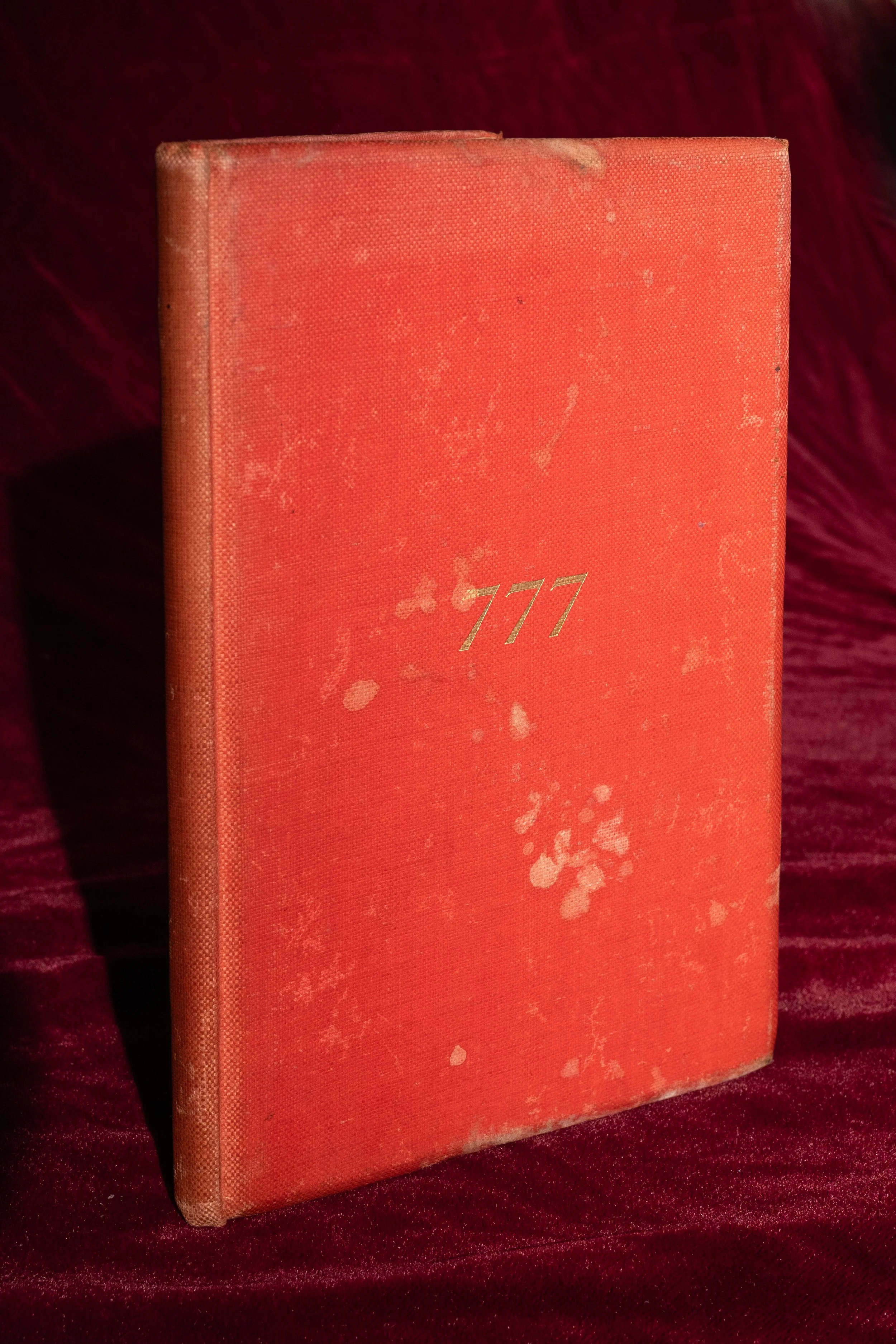 Image 1 of 17
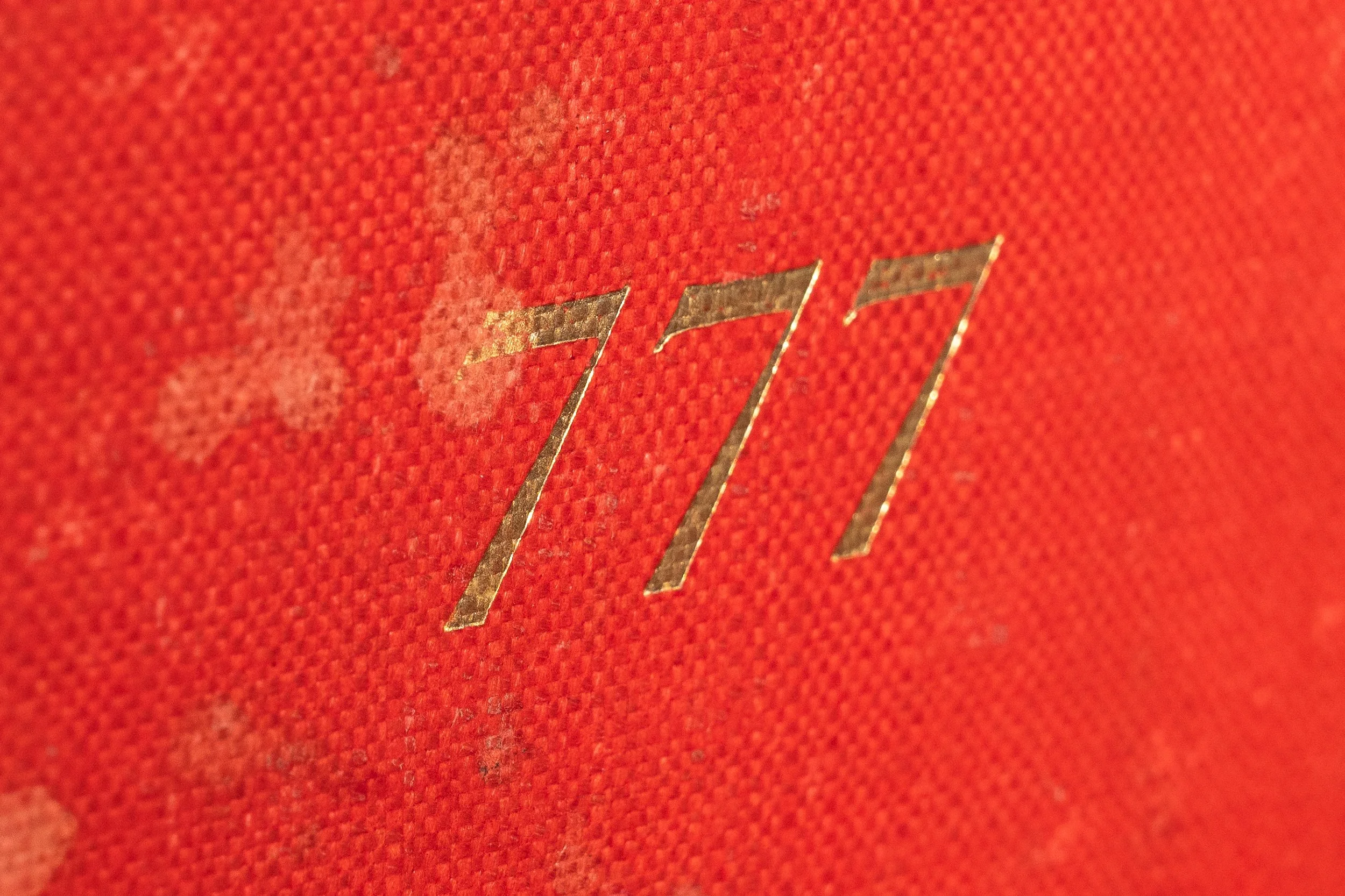 Image 2 of 17
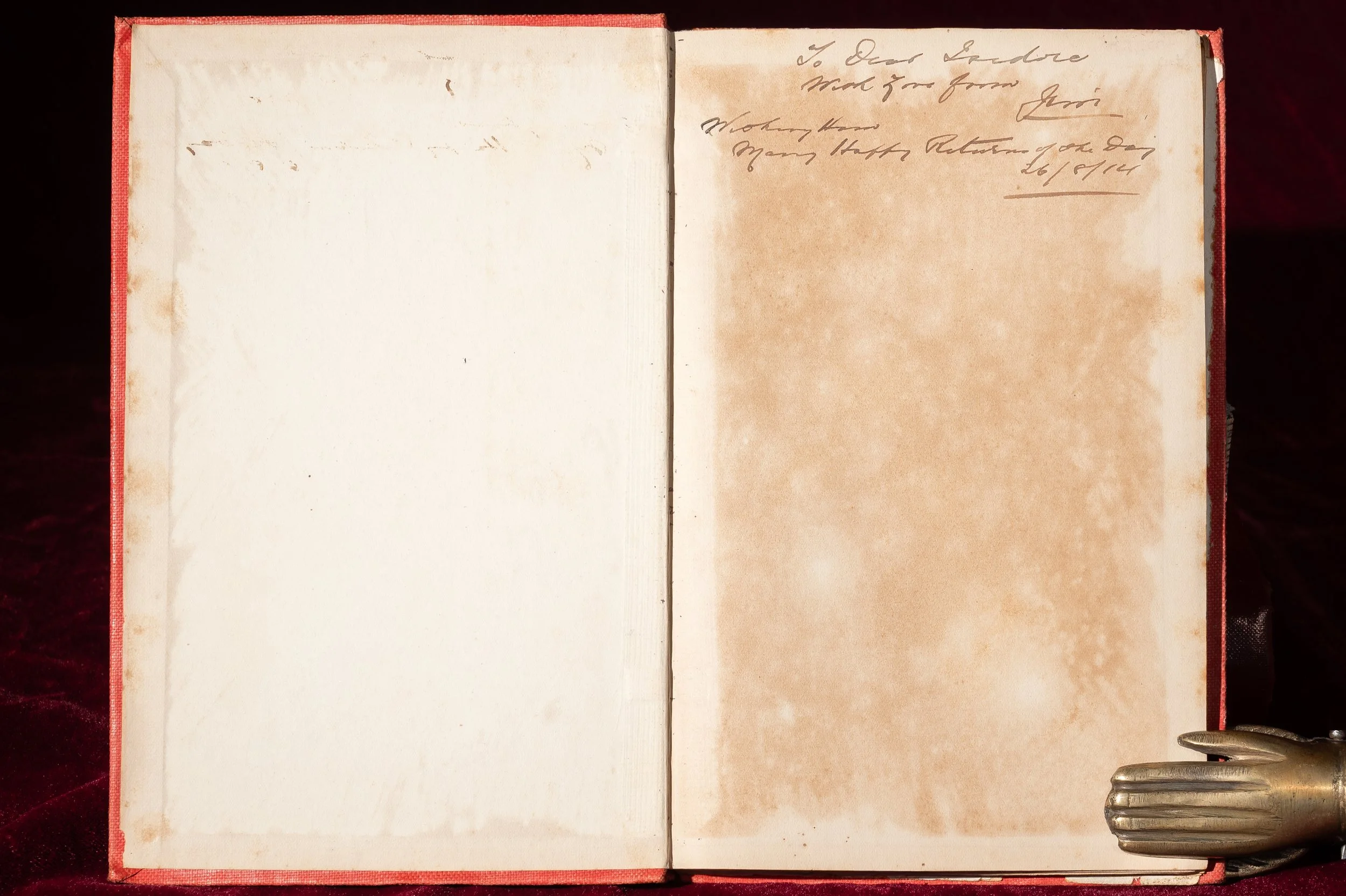 Image 3 of 17
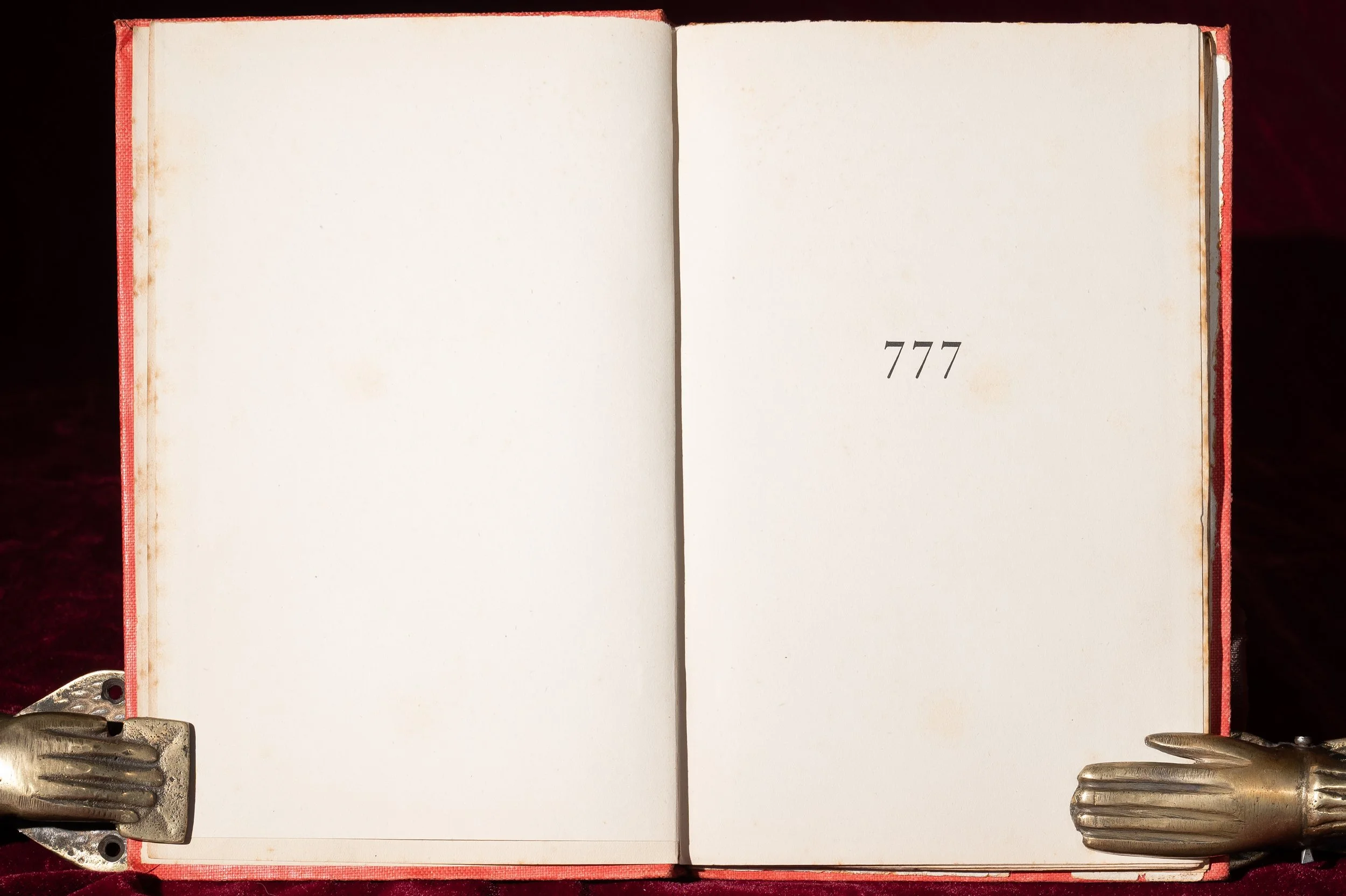 Image 4 of 17
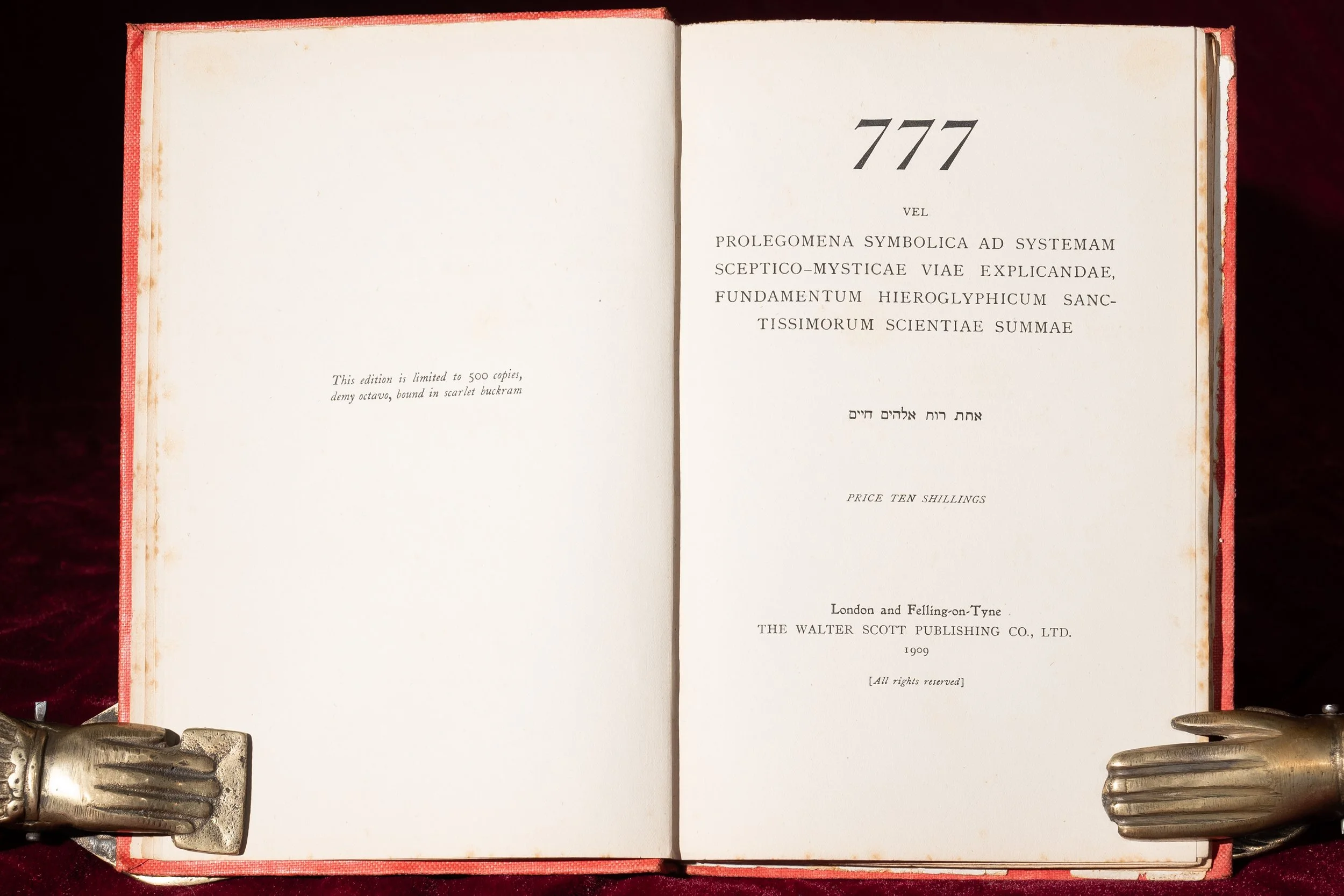 Image 5 of 17
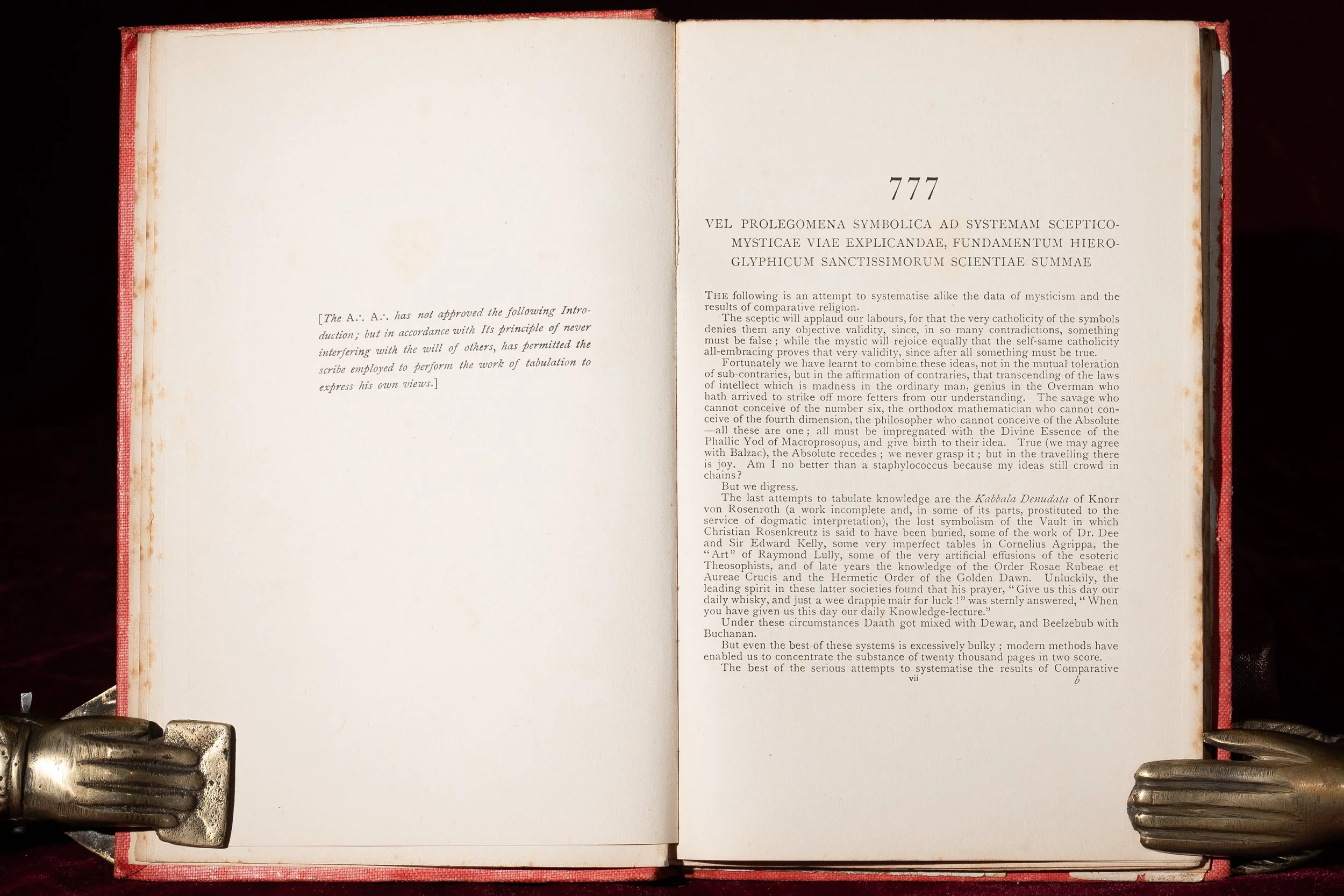 Image 6 of 17
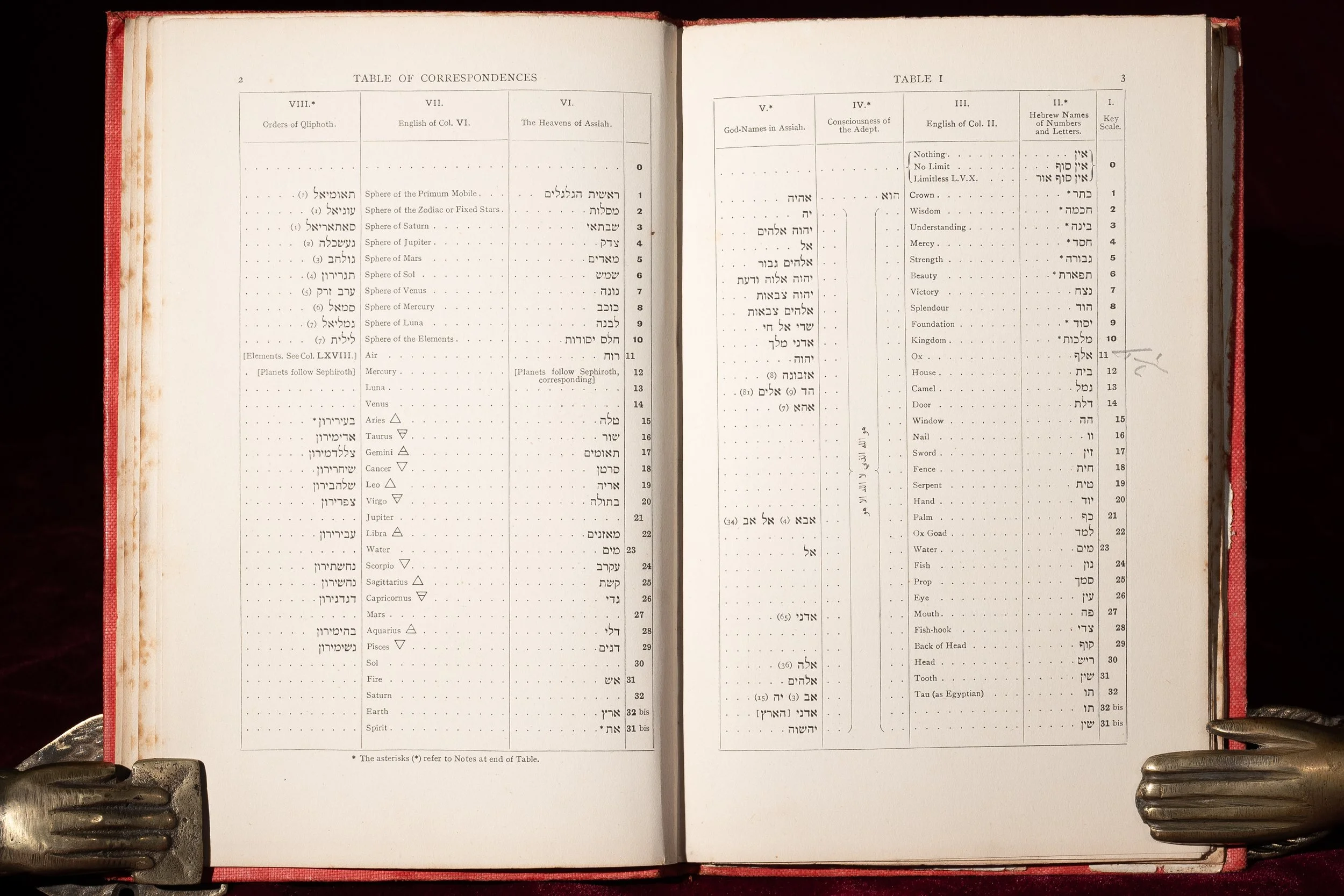 Image 7 of 17
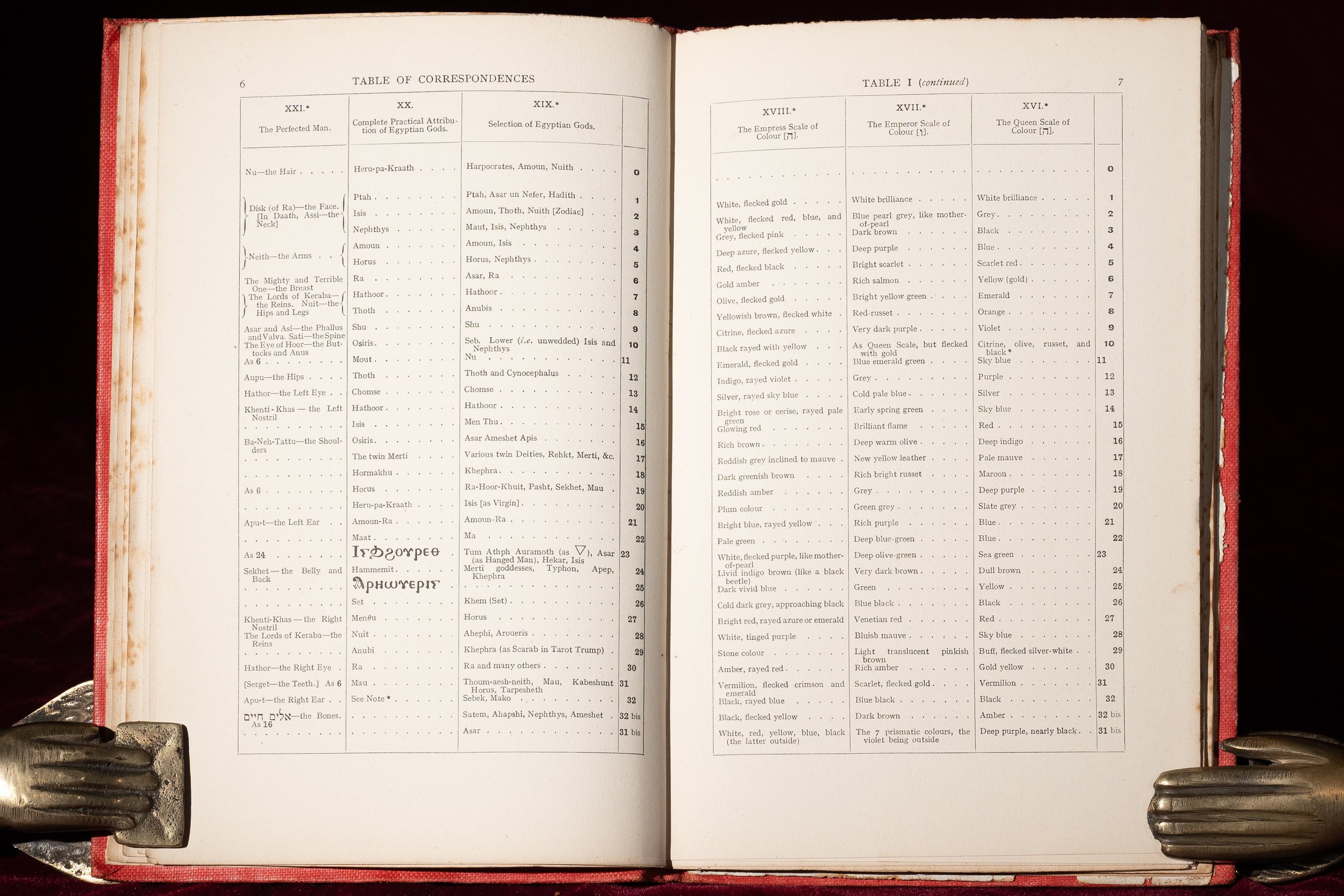 Image 8 of 17
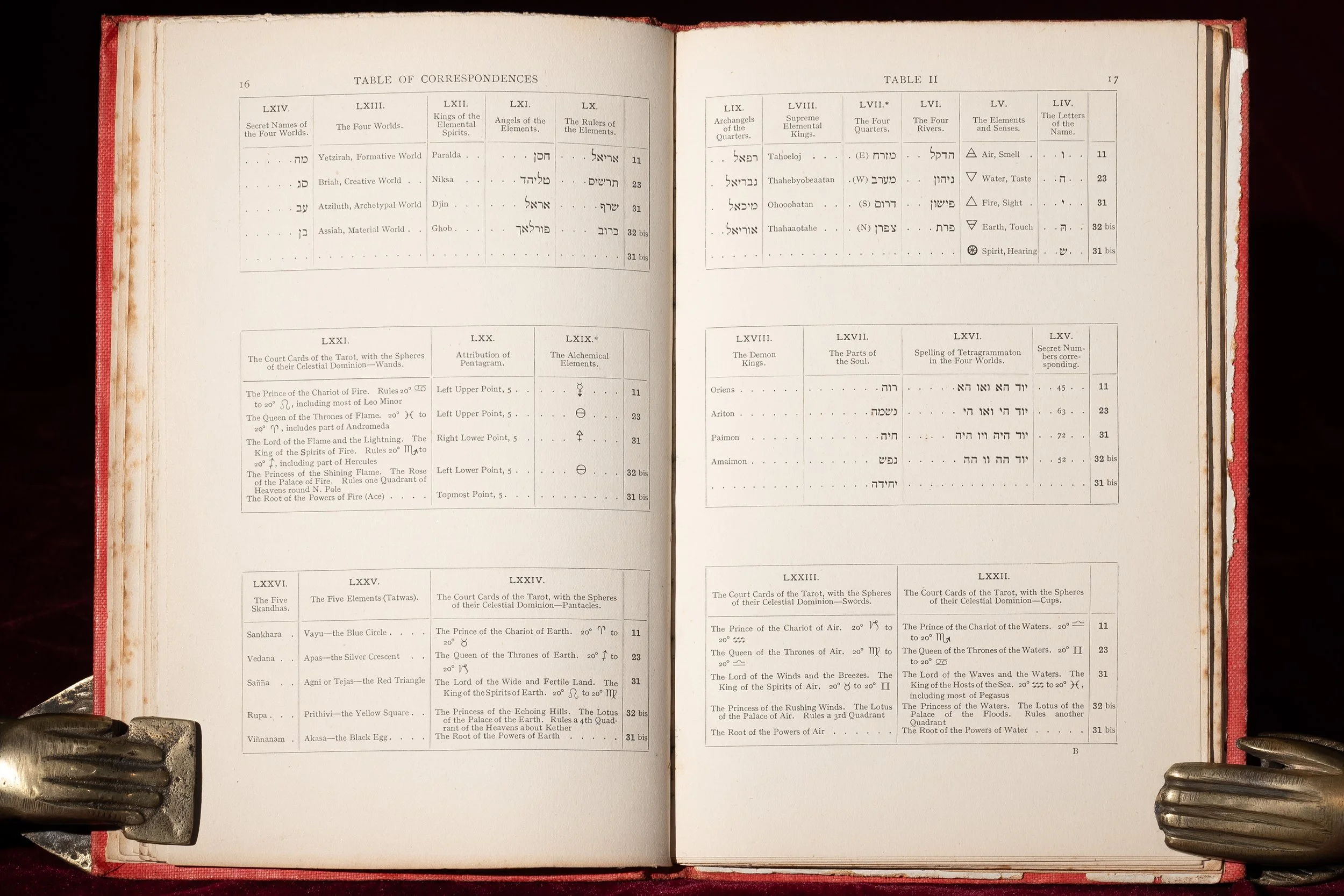 Image 9 of 17
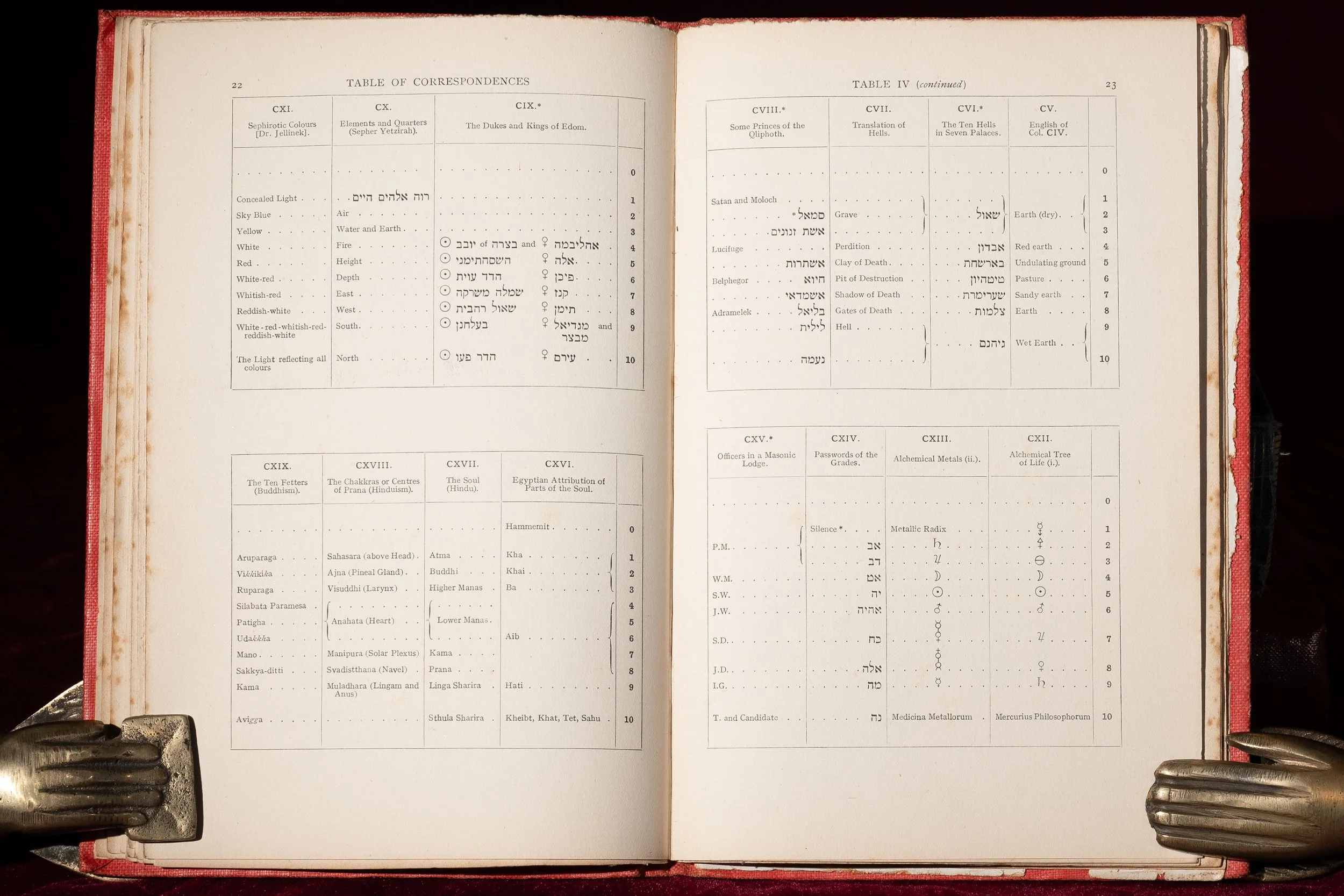 Image 10 of 17
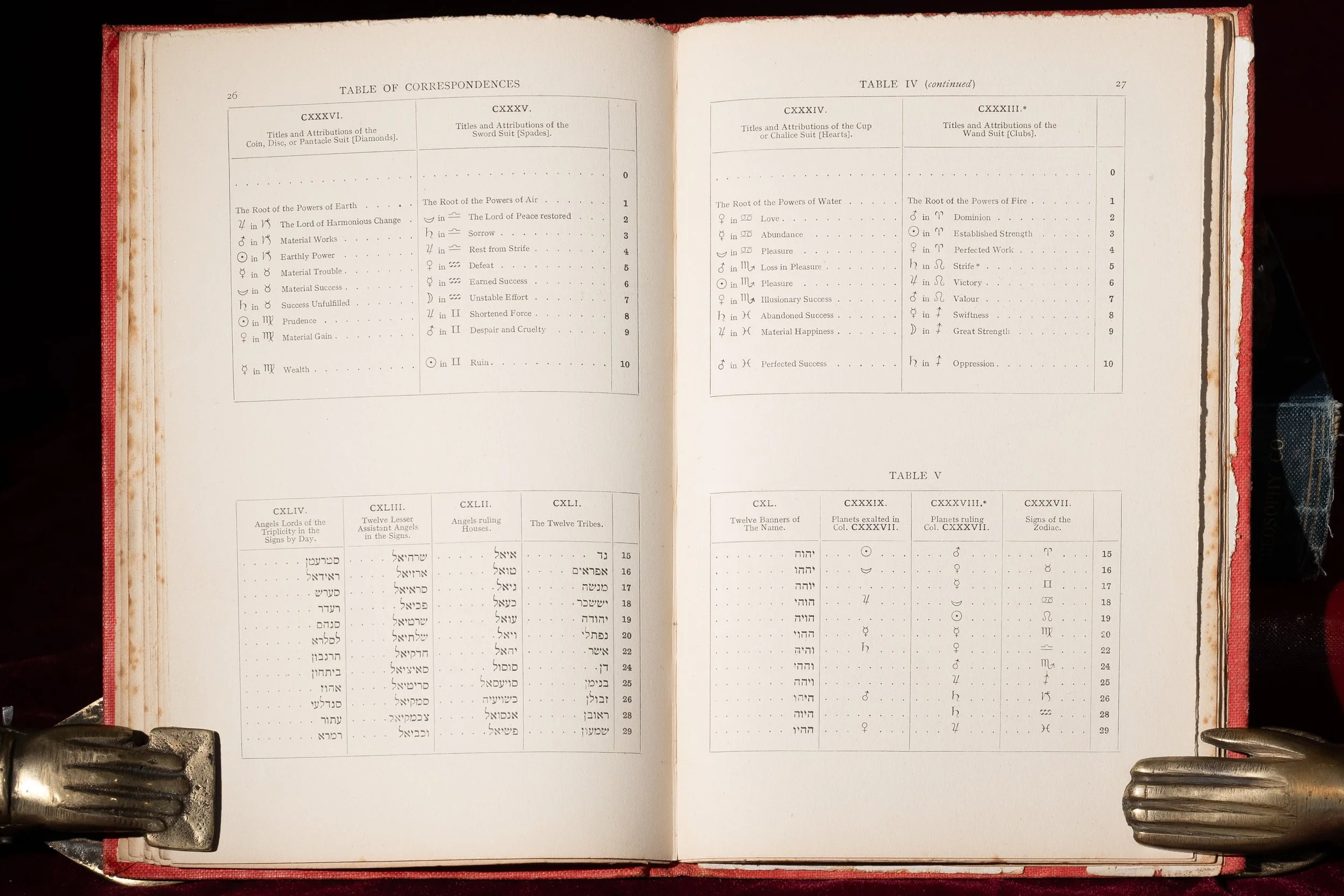 Image 11 of 17
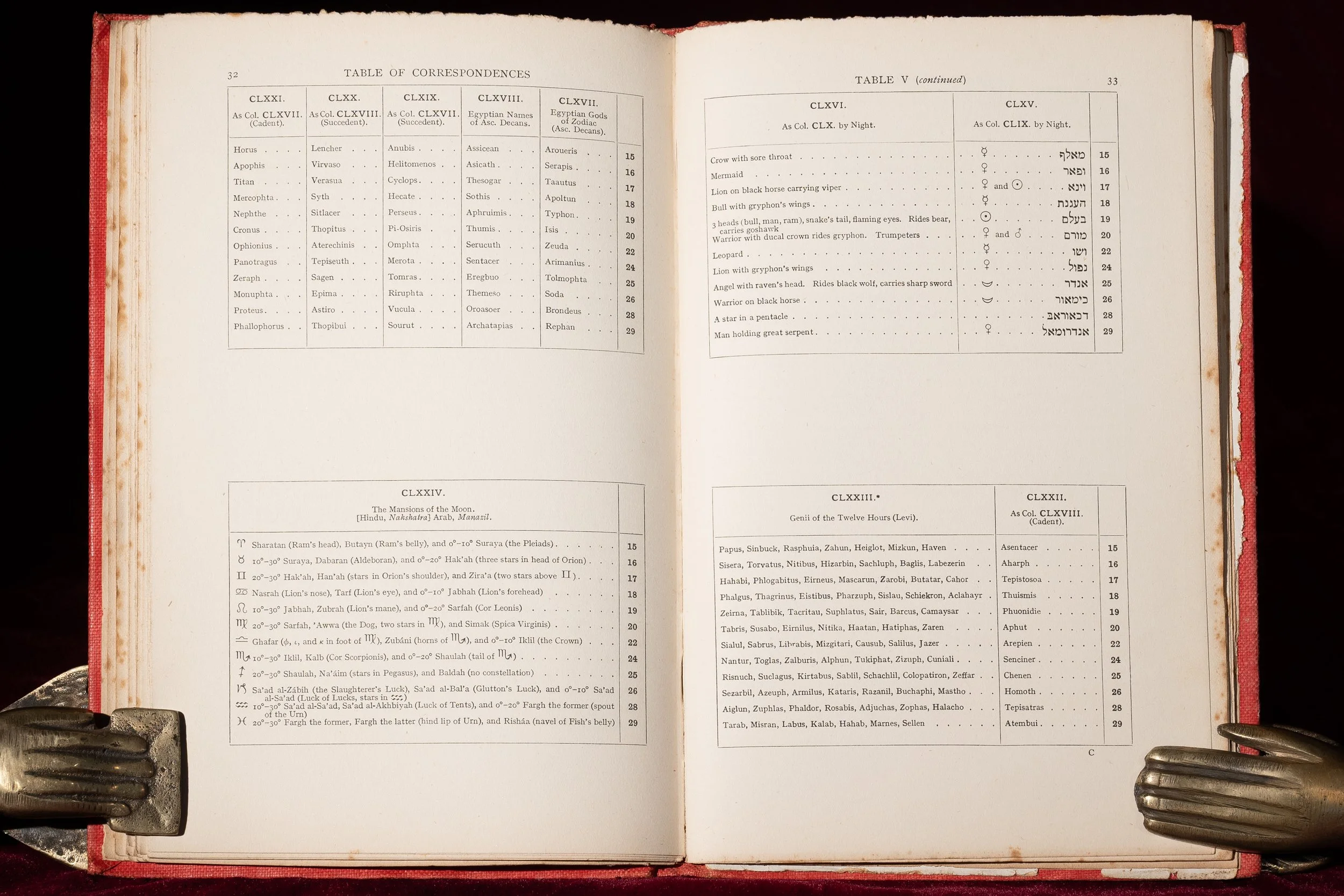 Image 12 of 17
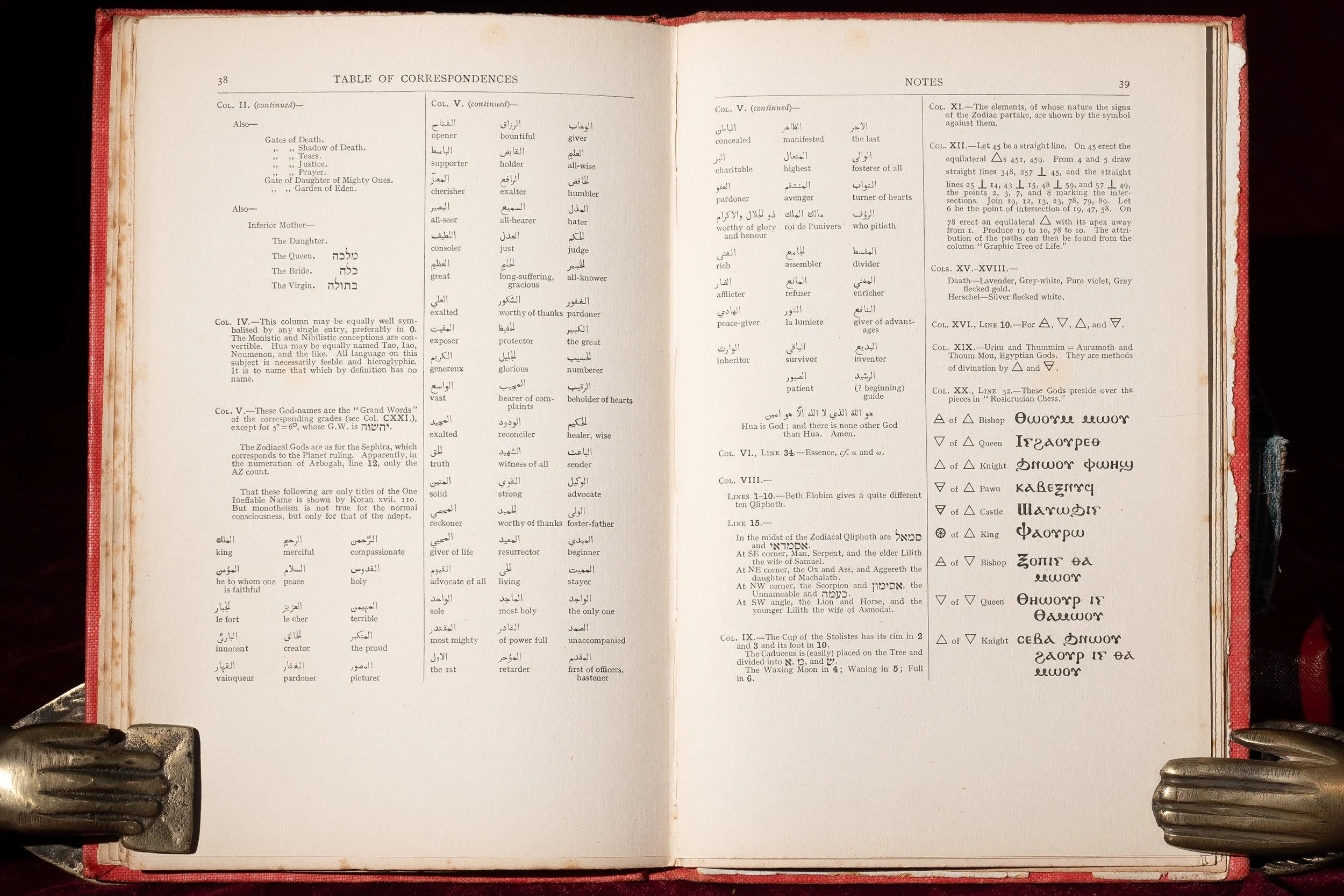 Image 13 of 17
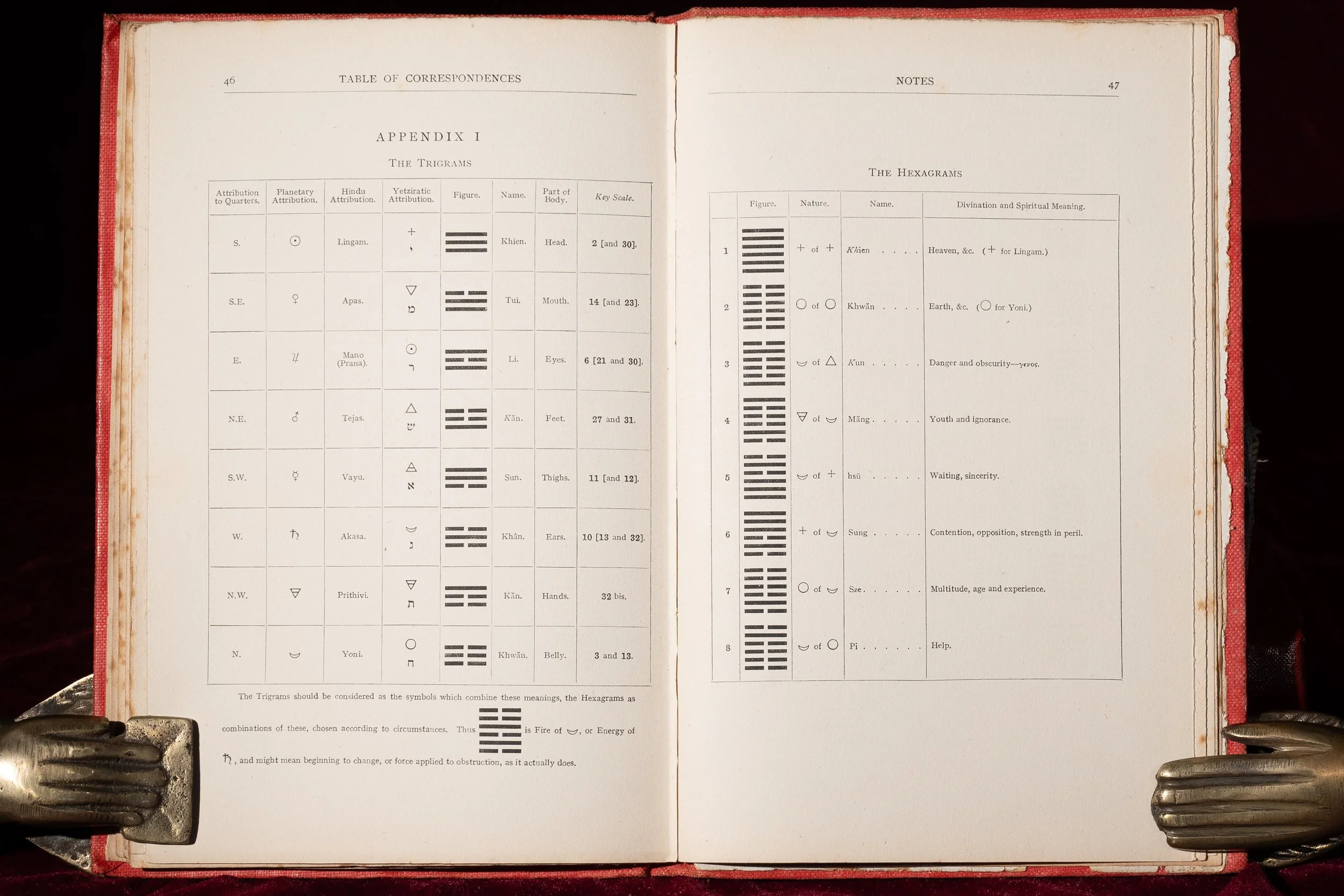 Image 14 of 17
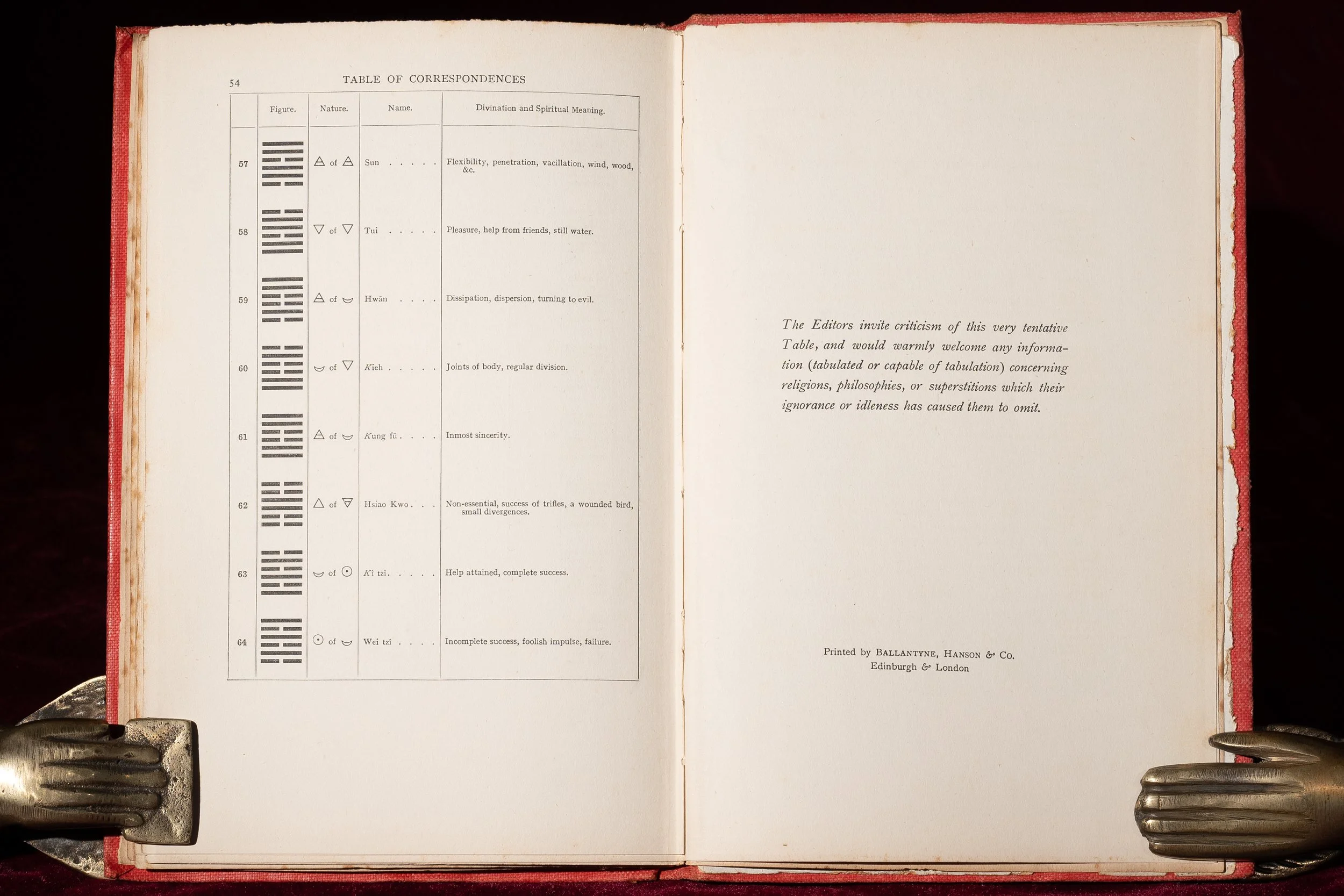 Image 15 of 17
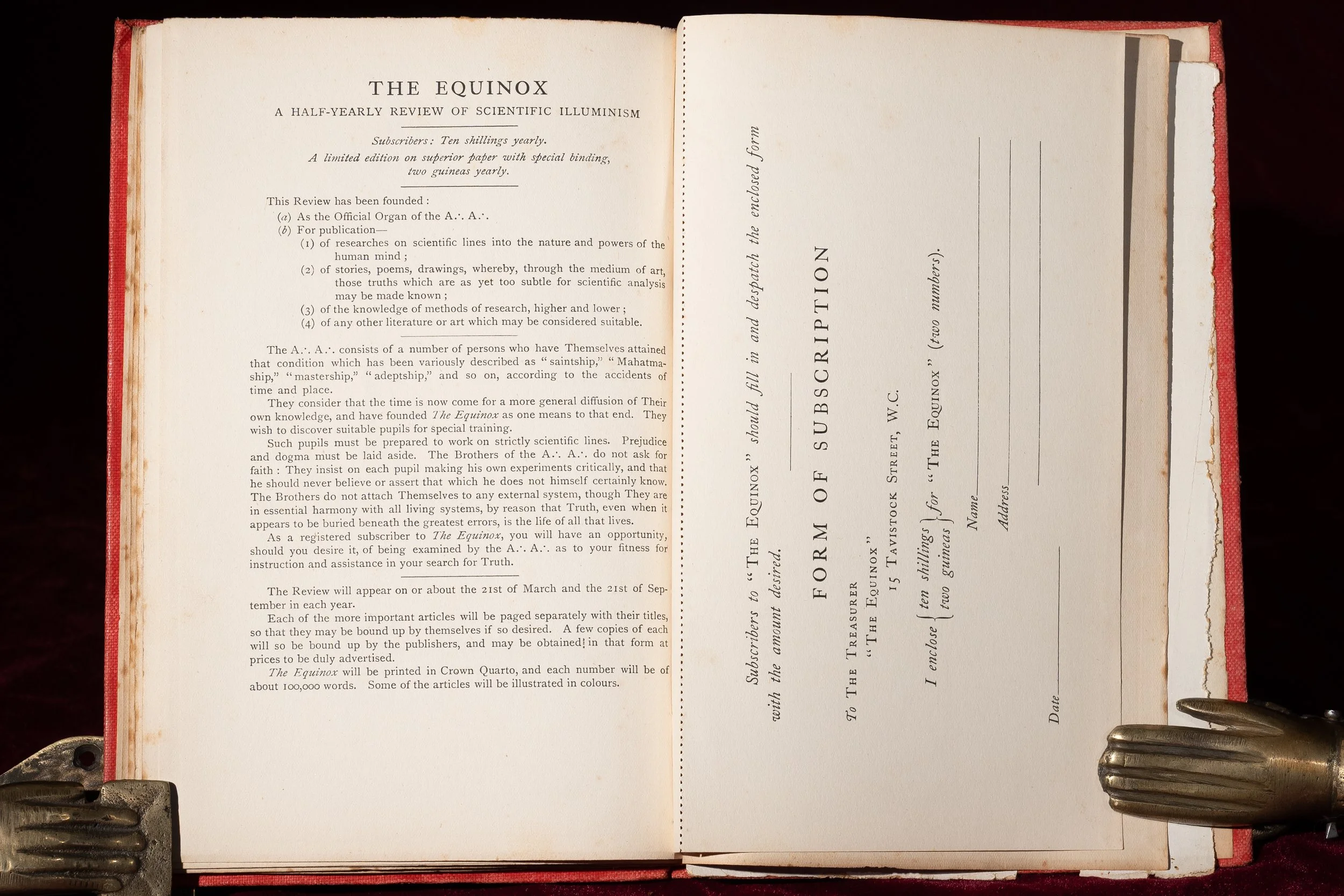 Image 16 of 17
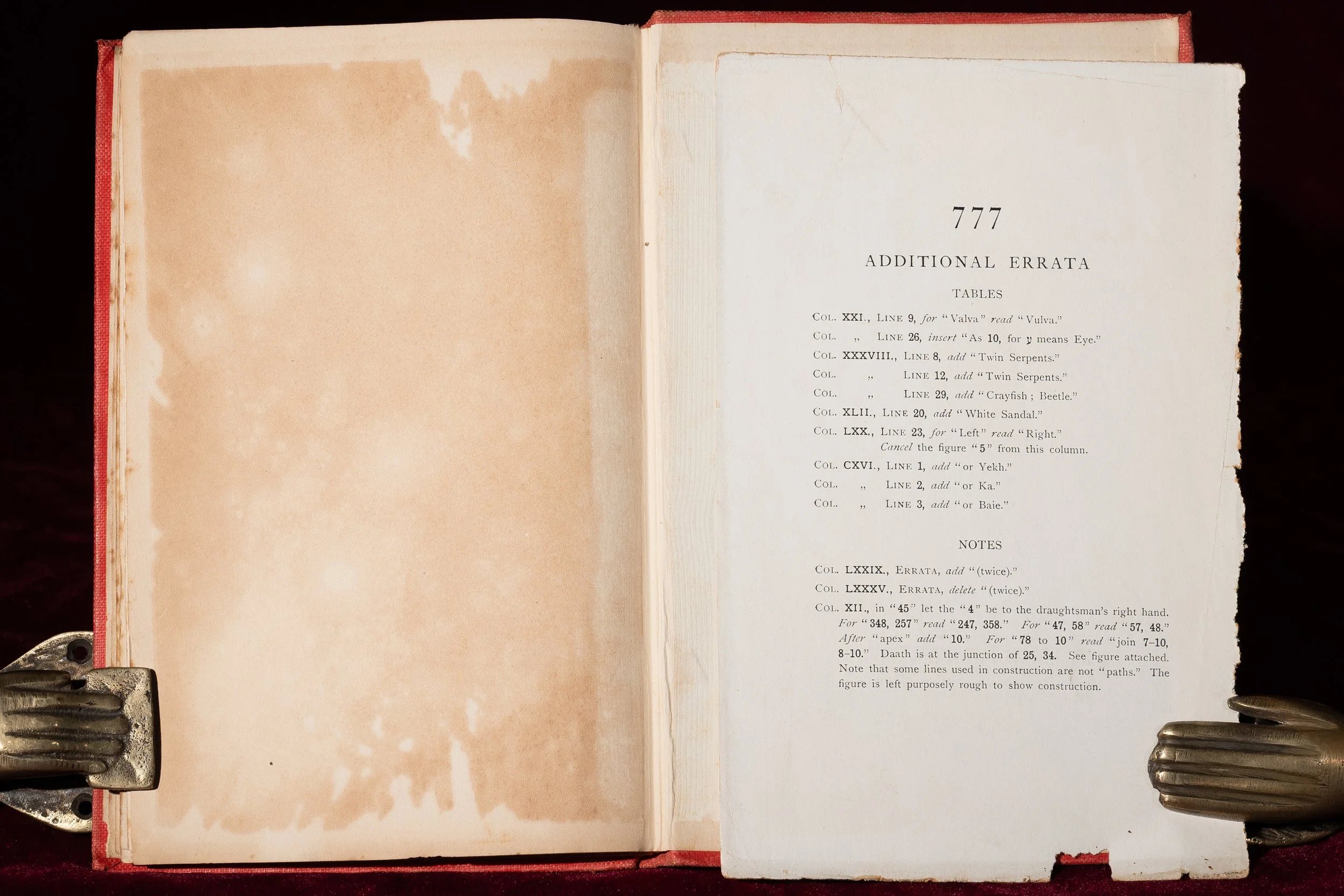 Image 17 of 17